
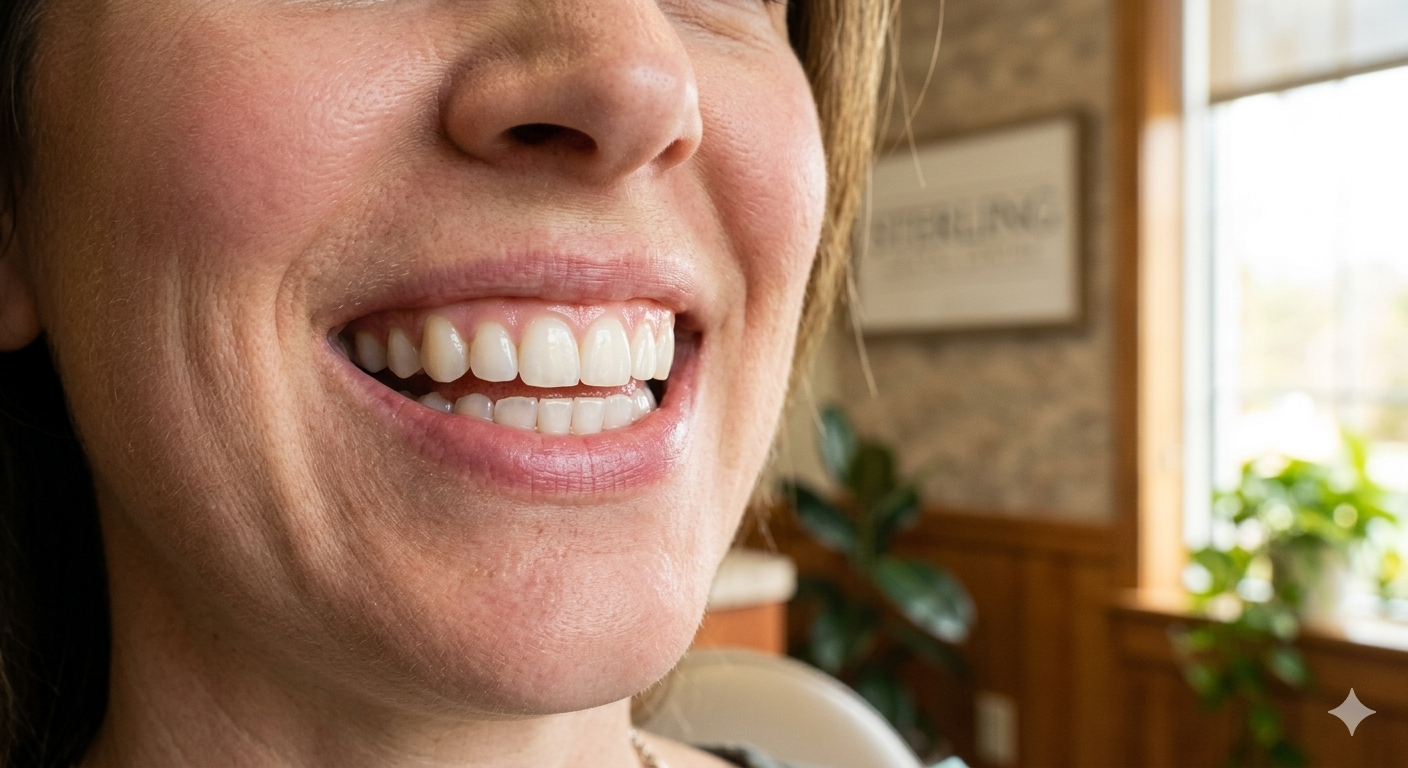
Most patients see their teeth get about 3 to 8 shades lighter with professional whitening. The change is visible the same day, and the shade settles over the following week or two. With reasonable habits, results usually last from six months to two years before a touch-up helps. How far your teeth lighten depends mostly on the kind of staining you start with, which is why a short exam before treatment gives you a more honest forecast than any before-and-after photo online.
Whitening is one of the most requested cosmetic treatments we provide in Sterling VA. The most common source of disappointment isn’t the treatment itself. It’s expectations set by filtered social media smiles and veneer cases that were never whitening at all. This guide shows what realistic results look like, how they change in the days after treatment, and how to tell ahead of time whether whitening will give you the result you want.
At Sterling Dental Center, Dr. Bursich and our team look at your teeth before recommending any whitening. The goal is a result that suits your smile and that you’re happy with a month from now, not just on day one.
What are the typical results of professional teeth whitening
For most patients, professional whitening lightens teeth by somewhere between 3 and 8 shades on a standard dental shade guide. A smaller group sees more than that, and some see less. The range is wide because whitening doesn’t add color to your teeth. It breaks down the stain molecules already inside the enamel, so the result depends on what those stains are and how deep they sit.
Stains that respond best:
- Yellow or yellow-brown discoloration
This comes from aging, coffee, tea, and red wine. It is the most common type, and it typically gives the most noticeable improvement. - Surface staining from food and drinks
These stains often start to lift after a cleaning and then whiten predictably.
Stains that respond less predictably:
- Gray or blue-gray discoloration
This is often linked to certain antibiotics taken while the teeth were developing. It sits in the deeper layer of the tooth and tends to improve only partly. - A single dark tooth
This usually means something has happened inside that tooth, such as an old injury or a previous root canal. Whitening the whole smile may make it stand out more. - White spots
These areas of early mineral loss can look more noticeable right after whitening before they blend in over the following days.
There’s also a limit everyone should know about: Crowns, Veneers, Bonding, and Tooth-Colored fillings don’t whiten. Dental materials don’t respond to whitening gel the way natural enamel does. If you have visible restorations on your front teeth, whitening can leave them looking darker than the teeth around them. That’s the main reason we look at your teeth before recommending treatment.
How long after teeth whitening will you see results
You’ll see results the same day as an in-office treatment, but the shade you see when you leave isn’t your final shade. Knowing this ahead of time prevents a lot of worry in the first week.
Here’s what the timeline usually looks like:
- Right after treatment: Your teeth look their brightest. Part of that brightness comes from temporary dehydration of the enamel during treatment.
- Days 2 to 7: As your teeth rehydrate, the shade often settles back slightly. This is normal and expected. It doesn’t mean the whitening failed.
- Weeks 2 to 3: The shade has settled. This is your true result, and the one to compare against the “before” shade recorded at your appointment.
- Months 6 to 24: Gradual darkening happens at a rate that depends on your diet and habits.
With custom take-home trays instead of in-office whitening, the change is gradual. Most patients notice a difference within the first few days of wearing them and reach their target shade over one to two weeks.
“The most useful thing I tell patients is not to judge their result in the mirror the evening of treatment,” says Dr. Bursich. “Give it a week or two. We record your starting shade before we begin, so you can see exactly how much changed once your teeth have settled.”
What happens at a professional whitening appointment
Professional whitening starts with making sure whitening is appropriate for you.
Your teeth and gums are checked first. Active cavities, exposed roots, worn enamel, and gum inflammation can all cause sensitivity during whitening, and some of them should be treated beforehand. A cleaning before whitening also matters. Gel works on enamel, not on plaque and tartar, so whitening uncleaned teeth gives uneven results.
During an in-office treatment, the gums and soft tissues are protected, the whitening gel is applied to the visible tooth surfaces, and the gel is refreshed in timed cycles. The whole visit usually takes about 60 to 90 minutes. Custom take-home trays involve a short appointment to take impressions or scans of your teeth, then wearing the trays with professional gel at home on a set schedule.
On cost: professional in-office whitening in Northern Virginia generally runs about $300 to $800, and custom take-home tray systems typically cost about $250 to $600. Whitening is cosmetic, so dental insurance usually doesn’t cover it. Your dentist may recommend combining approaches, such as an in-office session followed by trays for maintenance. Ask for a written estimate before you begin. Our Teeth Whitening Treatment in Sterling VA starts with that conversation about your goals and your teeth.
Do teeth turn yellow again after whitening
Yes, gradually. Whitening isn’t permanent, because the same things that stained your teeth originally keep doing so after treatment. How quickly the color returns depends mostly on daily habits.
Most patients keep a clearly lighter shade for six months to two years. People who drink coffee, tea, or red wine every day, or who use tobacco, tend to fall at the shorter end. People who limit staining drinks and keep up regular cleanings tend to fall at the longer end.
Habits that make results last longer:
- Be strict for the first 48 hours
Enamel absorbs stains more easily right after whitening. Avoid coffee, tea, red wine, dark sauces, berries, and tobacco during that window. - Rinse with water after staining drinks
A quick rinse after your morning coffee limits how much pigment settles into the enamel. - Use a straw for iced coffee and dark sodas
This keeps those drinks away from the front surfaces of your teeth. - Keep your six-month cleanings
Professional cleanings remove new surface staining before it builds up into noticeable dullness. - Do periodic touch-ups with custom trays
A few days of tray use every several months is usually enough to hold your shade, and it costs much less than repeating a full treatment.
What are the risks of teeth whitening
Professional whitening supervised by a dentist is considered safe for most adults, but it isn’t free of side effects. The two most common are tooth sensitivity and mild gum irritation.
According to a review in the Journal of Evidence-Based Dental Practice, tooth sensitivity is the most frequently reported side effect of whitening. It is generally mild and temporary and usually goes away within a few days after treatment ends.
Common, usually temporary effects:
- Sensitivity to cold or sharp twinges during the first day or two
- Mild gum irritation if gel touches the soft tissue
Risks that grow when whitening isn’t supervised:
- Overuse of over-the-counter products
Using strips or gels more often or longer than directed can increase sensitivity and irritate the gums. - Poorly fitting trays
One-size trays let gel leak onto the gums, which custom trays largely prevent. - Whitening over untreated problems
Applying gel over an active cavity or exposed root can cause significant discomfort.
Your dentist may recommend a sensitivity toothpaste for a week or two before whitening, or a lower-concentration gel used over a longer period, if you’re prone to sensitivity. Whitening is generally not recommended during pregnancy or for young children, whose teeth are still developing.
How to know whether whitening will give you the result you want
The patients happiest with whitening usually share three things: their discoloration is mostly yellow or brown, they have few or no visible restorations on their front teeth, and they expected a natural-looking improvement rather than a pure-white veneer look.
If your situation is different, it doesn’t rule you out. It may just change the plan. Teeth with gray staining, a single dark tooth, or several front-tooth restorations sometimes do better with other Cosmetic Dentistry Options, or with whitening first and then replacing older restorations to match the new shade. Planned in that order, the result looks even. Planned the other way around, it often doesn’t.
What to do next
If you’re thinking about whitening, here’s where to start:
- Book a cleaning and exam first if it has been more than six months
- Ask your dentist which type of staining you have and what range of improvement is realistic
- Tell your dentist about any sensitivity history, crowns, veneers, or bonding on your front teeth
- Plan treatment at least two weeks before a wedding, photos, or a big event so your shade has time to settle
- Ask about custom trays for touch-ups so your result lasts
At Sterling Dental Center, Dr. Bursich and our team help Sterling VA patients get whitening results that look natural, match their existing dental work, and hold up long after the appointment. We start with an honest look at your teeth so you know what to expect before you commit.
Contact Us Today: 703-433-0234
Visit Our Website: www.comfortfirstdentalsterling.com
FAQs
Q1. Is it worth getting your teeth professionally whitened?
A: For most people with yellow or brown staining, yes. Professional whitening typically produces a larger, more even change than store-bought products, with fewer sensitivity problems because the gel strength and tray fit are controlled. A dentist also checks first for cavities, restorations, or stain types that would make whitening disappointing, so you aren’t paying for a result you won’t get.
Q2. Is 6% or 16% teeth whitening stronger?
A: It depends on the ingredient. A 6% hydrogen peroxide gel is roughly as strong as, or slightly stronger than, a 16% carbamide peroxide gel. That’s because carbamide peroxide breaks down into only about one-third hydrogen peroxide. Always check which peroxide a product contains before comparing percentages, and ask your dentist which strength suits your sensitivity level.
Q3. How long does professional teeth whitening last?
A: Most patients keep a noticeably lighter shade for six months to two years. Daily coffee, tea, red wine, or tobacco use shortens that. Rinsing after staining drinks, keeping six-month cleanings, and occasional touch-ups with custom trays help keep the result much longer, without repeating a full in-office treatment.
Brighter Smiles. Honest Expectations. Results That Last.
— The Sterling Dental Center Team